Text Mervi Rantakari, Era Content | Photos Krista Luoma
As British company Pure DC develops a billion-euro data centre in Seinäjoki, SDC Project Ventures is playing a key role behind the scenes. “We help Pure find the right partners while also helping local companies discover new business opportunities created by the data centre,” say company representatives Jukka-Pekka Joensuu, Oona Saikkonen and Elmo Saikkonen.
What kind of company is SDC Project Ventures?
Oona: We are a development company and the local partner of British company Pure DC, the developer of the Seinäjoki data centre. When a large international company enters Finland and Seinäjoki for the first time, it does not have ready-made local networks to rely on.
We know the local business community and have strong relationships with the City of Seinäjoki and the subcontractors involved in the data centre project. We help Pure find the right partners while also helping Seinäjoki-based companies identify new opportunities arising from the data centre.
Elmo: In a way, we act as a bridge between an international investment and local expertise. We all want Seinäjoki and the surrounding region to benefit from this project as much as possible.
What kind of expertise does a billion-euro international project require?
Jukka-Pekka: Our strengths are international experience, a bold entrepreneurial mindset and Oona and Elmo’s strong connection to their home city of Seinäjoki.
I bring decades of experience in senior roles in international digital infrastructure, as well as my global networks. I was involved in the C-Lion1 submarine cable project backed by the Finnish government and institutional investors, and even then I recognised Seinäjoki as a promising location for data centres. I later began developing our business idea together with Oona and Elmo and their father, Taisto Saikkonen.
Elmo: While studying IT management in Innsbruck, I explored data centre locations in the Nordic countries as part of my thesis, using information from the Finnish Data Center Association (FDCA). I realised that the rapid growth of AI would bring major investments to Finland as well.
Entrepreneurship was nothing new to me. I was already building a water sports centre at Tanelinranta in Seinäjoki when I was in my early twenties.
Oona: I have worked in project development and, most recently, for IT infrastructure provider Atea, where I had a close view of the digitalisation of Finnish companies and the adoption of AI. I saw first-hand how the growing demand for computing power was beginning to affect our customers’ everyday operations.
Today, I combine my experience in the technology sector with my local knowledge to build cooperation between different stakeholders. It is work that brings together an international investment project and the future of my home region.
How did you find Pure DC?
Jukka-Pekka: We explored potential partners for the Seinäjoki data centre project. We convinced Pure of Seinäjoki’s potential and found a reliable and credible partner with whom we could move the project forward.
Anticipation is crucial in this business, and that is something Seinäjoki has done well. A billion-euro project cannot be located somewhere that only begins building the necessary infrastructure once the investment is already under way.
A data centre requires sufficient power, robust electricity and telecommunications connections, suitable land for construction and good logistics. Seinäjoki has been creating the right conditions for investment for years through the long-term development of the Kivenneva area.
What does a data centre actually do?
Oona: Data centres form part of the infrastructure of our digital society. They process and store the data needed for everything from cloud services and streaming to banking, public services and artificial intelligence.
The rapid development of AI is increasing the need for computing capacity even further. If the Seinäjoki data centre project is completed on the planned scale of 550 megawatts, it will be a highly significant data centre campus even by international standards.
The first phase is expected to become operational in 2027–2028.
What economic impact could the data centre have on Seinäjoki?
Oona: The first construction phase is expected to employ around 1,500 people, with approximately 3,000 people involved across the project as a whole.
Elmo: The impact will extend far beyond building the data centre itself. The project will stimulate business activity throughout the region. Thousands of people working on the data centre will need accommodation, food, transport, healthcare and other everyday services.
Construction will also create work for local subcontractors, including earthworks companies, electricians and logistics providers.
Jukka-Pekka: The completed data centre will also create jobs. According to estimates, a 100-megawatt data centre employs around 100 people directly with the operator and approximately the same number within its partner network.
If the Seinäjoki campus develops to the planned capacity of 550 megawatts, the completed campus is estimated to employ around 600 people.
How can local companies get involved?
Jukka-Pekka: There are many opportunities, so I encourage companies to be proactive. Our role is to build connections between these businesses and the company implementing the project.
We have already shared information about local companies, and we are receiving enquiries from businesses across Finland and Europe.
Oona: We are developing channels that will make it easier for companies and employees to find opportunities related to the data centre. Our plans include creating a skills portal for job vacancies as well as a similar channel for companies interested in providing services.
In the future, the vision is for Kivenneva to develop into a Smart Campus, creating an entire ecosystem around data, energy, technology and services.
What could develop around the data centre once construction is complete?
Elmo: Our vision is for a Smart Campus to emerge around the data centre, creating an ecosystem of data, energy, technology and services.
Being located close to a data centre is attractive, for example, to companies that require large amounts of computing capacity and high-quality digital infrastructure. It would be fantastic to see such companies establish operations in Seinäjoki and provide services to customers around the world from here.
Oona: The heat generated by the data centre can be utilised not only in district heating but also in many industrial applications. Seinäjoki has a strong industrial base, particularly in the food sector, so we see some very interesting opportunities here.
We want to find solutions where the data centre’s energy flows and other businesses in the region support one another and create new business opportunities.
What kind of expertise will the data centre bring to Seinäjoki?
Elmo: Data centres require specialist expertise in areas such as electrical engineering, automation, information technology and infrastructure. Finland currently does not have enough professionals with all the skills the industry needs.
Pure DC has already started developing cooperation in education and training with institutions including SeAMK and Sedu. The aim is to ensure that, in the future, as much of the expertise required as possible can be found in Finland and particularly in the Seinäjoki region.
What could the data centre mean for Seinäjoki internationally?
Jukka-Pekka: The project will put Seinäjoki on the investment map in an entirely new way. This first major investment can act as a springboard for further development.
Once high-quality infrastructure, expertise and international networks are established here, the threshold for other companies to invest in Seinäjoki will also become lower.
Oona: At its best, Seinäjoki could develop into an internationally recognised data centre and technology hub, bringing together local and international companies while continuously developing new expertise for a growing industry.
Elmo: Our goal is for the Seinäjoki data centre to become an internationally recognised pioneer for the industry. For us, this project is also about everything that can grow around it.
We are doing our dream job when we get to help build new expertise, businesses and networks in Seinäjoki and, in our own way, strengthen the vitality of our home region.
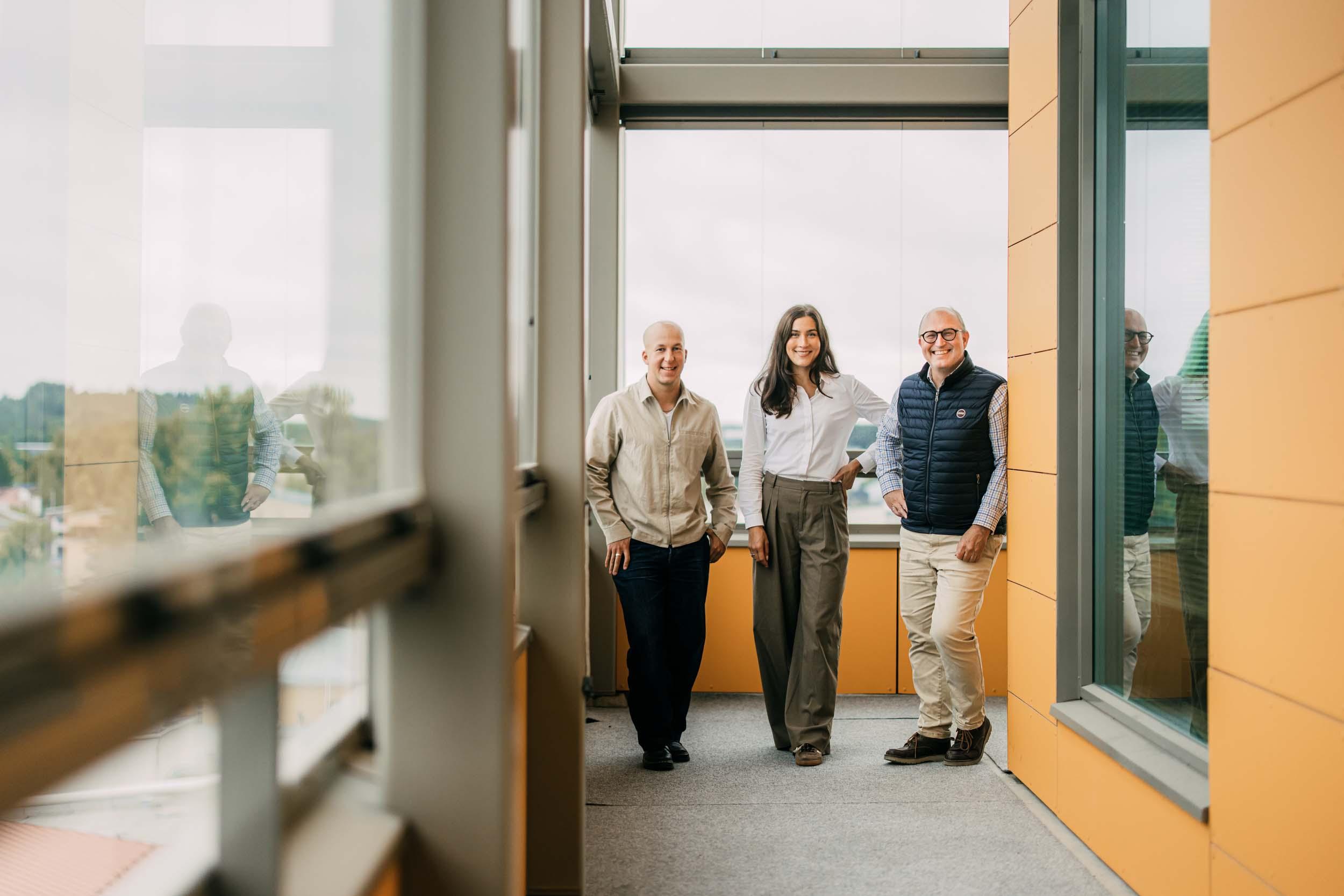
SDC Project Ventures helps find partners for Pure DC, the developer of the Seinäjoki data centre. Pictured are SDC Project Ventures representatives Elmo Saikkonen, Oona Saikkonen and Jukka-Pekka Joensuu.
Want to learn more about the opportunities created by the data centre? Get in touch with SDC Project Ventures.
Do you want hear more about Seinäjoki? Please contact:
-

Pajunen Jukka
Read more: Pajunen Jukka